When Every Department Wins and the City Loses
The Three Superfluities: Why 11th-Century China and 21st-Century Chicago Share the Same Ghost
In 1060 AD, the Song Dynasty was the most sophisticated bureaucracy on earth, yet it was dying from what historians called San-Rong (The Three Superfluities). The most lethal was Rong-Guan—redundant officials. To prevent any one department from becoming too powerful, the Emperor created overlapping jurisdictions. One office would order a canal dammed for irrigation; another would order it demolished for grain transport. They optimized their own silos while the empire’s economic flow was strangled by the very people paid to manage it.
We haven’t learned the lesson.
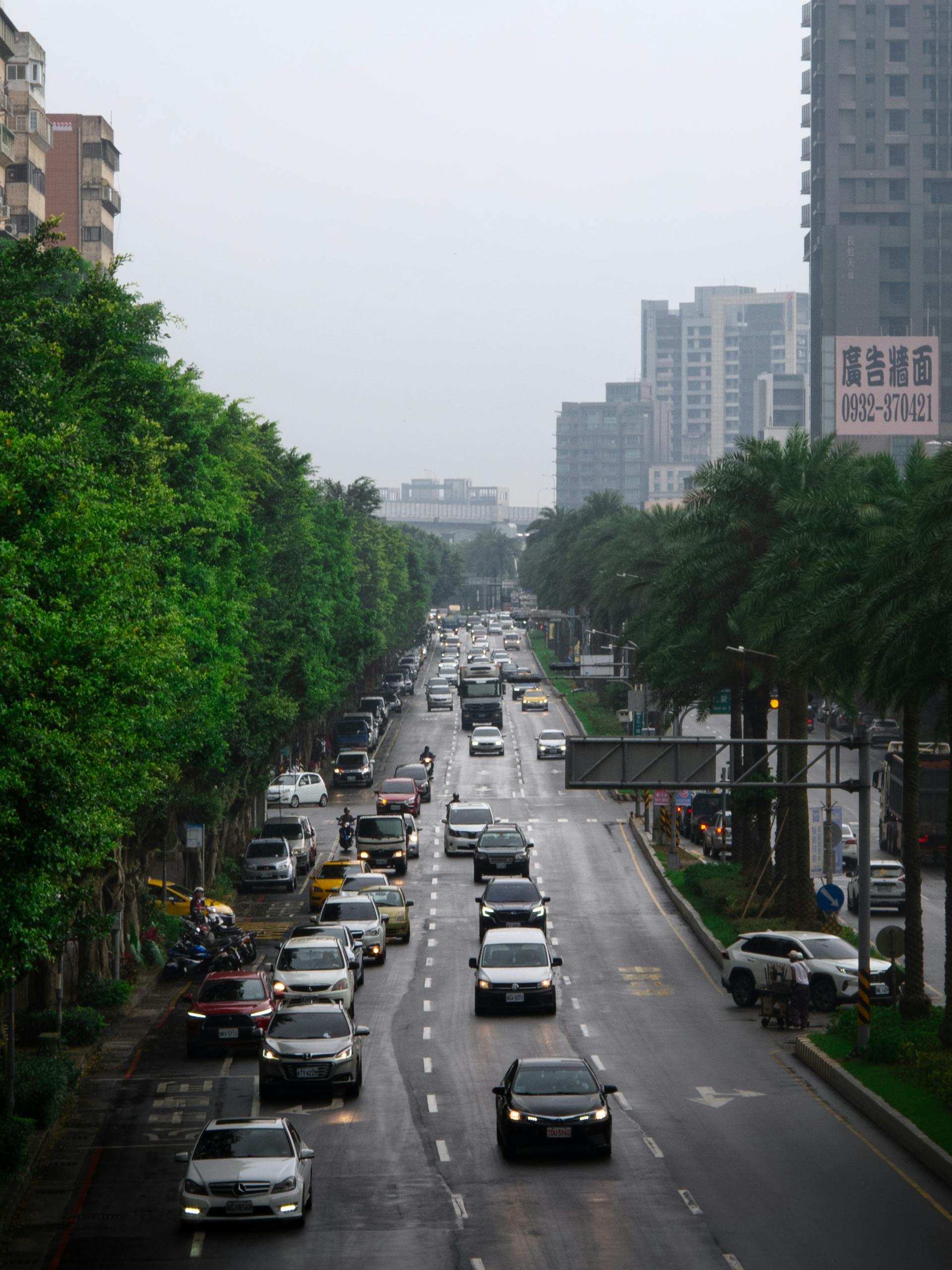
Consider a recurring municipal nightmare, a “representative parable” documented in city audits from Chicago to Dallas: The Transportation Department repaves a major artery like Archer Avenue—smooth asphalt, fresh paint, a win for the ward. The next day, the asphalt is still warm when the Water Department jackhammers through it to replace a corroded main line they had been meaning to get to for the past four years.
Nobody at Transportation knew Water was coming. Water didn’t know the permit Transportation had just closed. Each department hit their quarterly targets and stayed under budget, while the street was destroyed twice in one summer. This “Silo Tax” ruins resident trust, but it never shows up in a departmental performance review.
We treat these as “communication glitches,” but they are actually a failure to see the City-as-a-Mesh. First introduced by urban theorist Anthony Townsend, the “Mesh” is the realization that a city is not a collection of departments, but a single, interconnected network. He argued that cities aren’t just collections of buildings, but interconnected digital and physical networks where every intervention ripples through nodes you didn’t know existed.
But the Mesh is only one piece of a larger reality. In Traditional Chinese Medicine, health is the free flow of energy. When tissue is inflamed, it blocks that flow.
Your departmental silos are that inflammation. Townsend identified the network, but our theory looks at the organism. The silos are optimized for their own metrics, but they ignore the living reality where transit reshapes land values, land values dictate business locations, and businesses create the traffic patterns that destroy the roads. The energy is already trying to flow; the org chart is simply the blockage.
So what does this mean? In essence, the organization, or in this case the city, is actively working against itself. Imagine if your stomach was actively trying to sabotage your liver. Instead of spacing all of the foods out, it decides to send fats, sugars, alcohol, ultra-processed foods all at once. Then let’s pretend that the liver begins to send out giant energy spikes into the blood stream to signal to the brain that it’s making good decisions, but then overloading the pancreas secretly. This is exactly what happens when every department optimizes for itself rather than working together.
This goes beyond systems thinking, which only focuses on inputs and outputs and assumes every component behaves as a machine. In reality, autonomy lives throughout all the levels of the organization- from leadership, to departments, teams, and even the individual. All of them work within their own reward structure, measure their own success, and constantly shift the balance of power throughout the organization with every decision.
When these decisions are positive, then the organization as a whole can flourish. When they are negative, they can cause dissonance that ripples throughout the organization, leading to chaos, missed deadlines, attrition, or existential crises.
If you are concerned about these types of imbalances in your organization, we’d love to hear from you. Reach out to us to discuss how we might be able to help you avoid the “Silo Tax” for your city.
